// this week in AI
This week in AI: assistants move into your accounts

Every week dozens of AI releases come out. 95% of them are no use to you. Here you'll find the 5% that matters, explained without tech jargon — with a single question in mind: what changes for anyone running a business? This week the thread holding almost everything together is a single one: assistants have stopped chatting and started asking for the keys — to your email, your campaigns, your documents. Two stories tell you how convenient that is. One tells you how much it can cost.
1 · Meta AI connects to your accounts and reads the real numbers
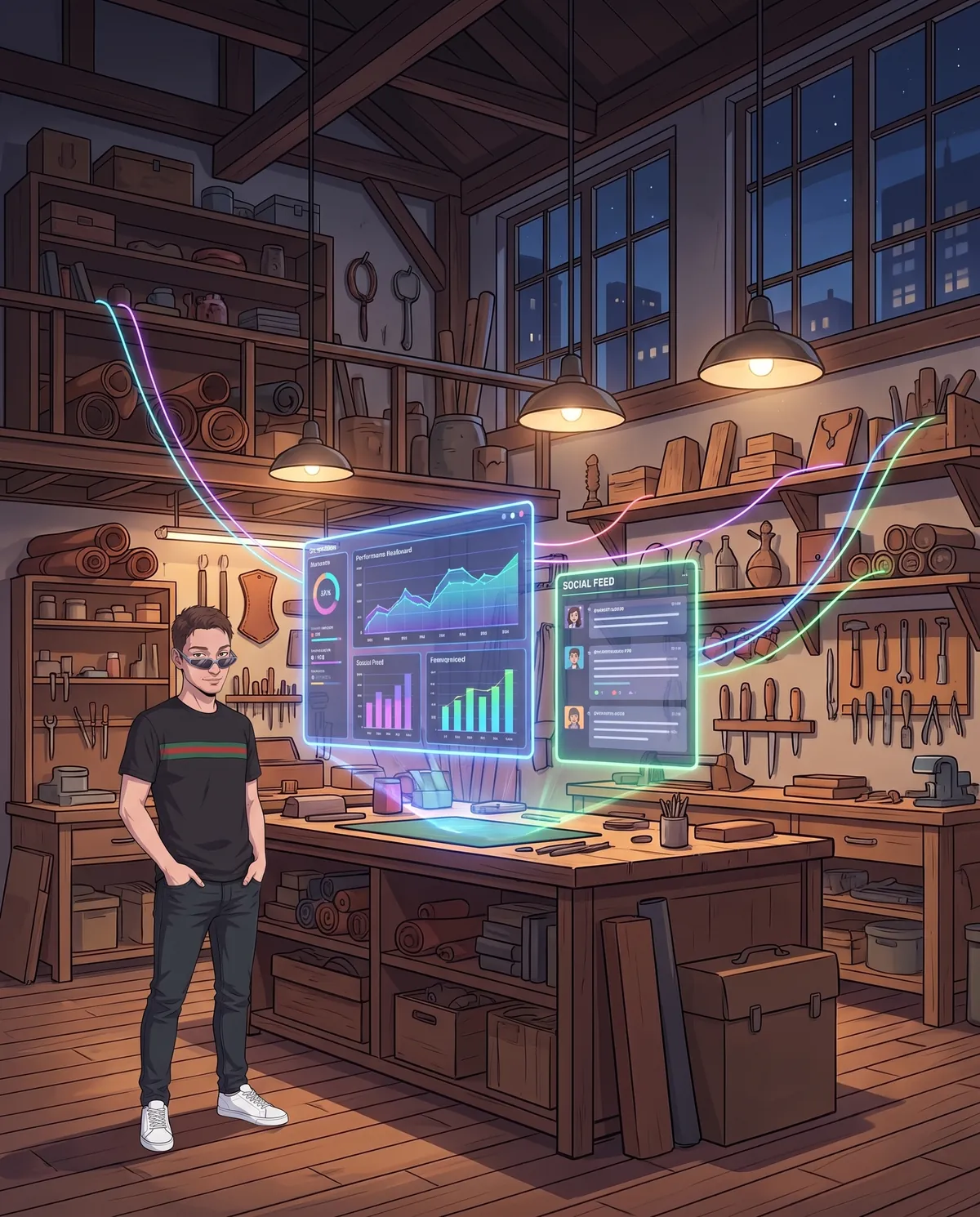
On August 19, Meta announced that Meta AI can connect directly to Facebook and Instagram professional profiles, Meta Ads campaigns and Google Workspace — Gmail, Docs, Sheets and Slides. From there it answers questions about how your profile is really doing: which content worked, which creatives have worn out, where the budget is going. It compares your organic content with the public content of similar brands, prepares reports, presentations and spreadsheets, and can do it on a recurring basis — every Monday morning, for example. The rollout is gradual on meta.ai, on the mobile app and on a new desktop app for Mac, available only in some regions at launch. One detail worth more than all the rest: Meta AI doesn't execute anything on its own. It doesn't move budgets, doesn't edit audiences, doesn't change creatives, doesn't pause campaigns. It advises, and that's it.
2 · Gemini enters Google Chat, but only if your account is in English

As of August 26, Google is replacing the old Google Chat side panel with Ask Gemini in Chat: a single command line inside the workplace messaging tool that searches through Workspace data, summarizes long discussions, generates content, manages tasks and events and keeps work organized in sessions. The rollout is gradual — it can take up to fifteen days to appear — and is reserved for the Business Standard and Plus, Enterprise Standard and Plus and Google AI Pro for Education editions. Until October 1, 2026, Workspace customers get higher usage limits as a promotion; after that date the normal limits kick in. And there's a constraint that weighs heavily in Italy: for now the feature only reaches accounts with the language set to English. Everyone else keeps the old panel until Google expands language support.
3 · Claude has a single memory, and now it lets you read it

On August 25, Anthropic unified memory between the Claude chat and Claude Cowork: what the model learns on one side it finds again on the other, and the update happens during the conversation, not just at the end. The interesting part isn't the convenience, it's the transparency. Everything Claude has memorized is listed by topic under Settings → Memory, and every entry can be read, corrected or deleted. Sensitive topics — health, ethnicity, religion, gender identity — stay out unless you enable them manually, and when something sensitive is saved, you get a notification. Some categories never get in: identity documents, ID numbers, criminal records. The feature is available on the Free, Pro and Max plans, on web, desktop and phone.
4 · The assistant that does everything and the “perpetual and irrevocable” license

Instinct is a personal assistant in private beta, born from a group led by Noah Shinn, a former researcher at Sierra: it connects to email, messages, calendar, screen, mouse movements and keyboard to make bookings, tidy up your inbox and search for flights. Around the launch, TechCrunch gathered a series of heavy criticisms. The terms of use grant the company a “perpetual and irrevocable” license on the user's materials, model training included. Emails remain stored in plain text even after the service has been disconnected. The assistant can enter into binding commitments without asking permission first. And some researchers showed how easy it is to fool it with phishing, all the way to verification codes.
5 · Anthropic heads for an IPO: the backlash becomes a written risk

According to CNBC, citing people familiar with the matter, the prospectus with which Anthropic will go public will list “AI backlash” as a risk category in its own right: regulatory restrictions, public protests, reputational damage — things that can affect revenue and deals. The company has already held preliminary meetings with banks and investors in San Francisco. It's one of the first times an AI developer has put social hostility in writing as an item that weighs on the books. The context of the numbers is what it is: a private valuation close to a trillion dollars, market expectations even higher, a listing expected in the fall. In support of the risk, a May Gallup poll is also cited, in which seven out of ten Americans say they're against AI data centers near their homes.
In short
Meta AI reads your data but touches nothing, Gemini enters Google Chat only if your account is in English, Claude opens up the archive of what it has memorized, an ambitious assistant takes a perpetual license on your materials, and the company behind Claude heads for an IPO with the backlash written among the risks. The thread is a single one: the convenience of these tools is paid for in access, and access should be granted the way you hand over the keys to the shop — to whoever needs them, for what they need, knowing when to take them back. This week's two moves cost half an hour in total: look at what an assistant has memorized about you, and reread which folders and which mailboxes you've already connected without thinking.
Sources: Small Business Trends (Meta AI tools for small businesses) · Axios (the Meta AI Mac app) · Google Workspace Updates (Ask Gemini in Chat) · Neowin (the Chat side panel replaced) · TechCrunch (Claude's unified memory) · TechCrunch (the doubts about Instinct) · CNBC (AI backlash in Anthropic's prospectus) · Gizmodo (Anthropic and investors).
Frequently asked questions
What can Meta AI do when it's connected to Instagram, Facebook and Meta Ads?
Since August 19, Meta AI can connect to professional Facebook and Instagram profiles, Meta Ads campaigns and Google Workspace: it tells you which content worked and where the budget goes, and it prepares reports, even every Monday. It doesn't do anything on its own: it only gives advice. Connect it with your business account and only to the folders it needs.
Why can't I see Ask Gemini in Google Chat?
Because since August 26 the feature is rolling out only to Workspace accounts with the language set to English, on the Business Standard and Plus, Enterprise Standard and Plus and Google AI Pro for Education editions, with a rollout that can take up to fifteen days. If your account is set to Italian, you won't see it, and nothing's wrong on your end.
How do I see and delete what Claude remembers about me?
Go to Settings → Memory: everything Claude has memorized is listed by topic, and you can read, correct or delete each entry. Right away, remove any customer and supplier data that got in by mistake, along with notes on negotiations, margins and prices. Keep the rest, if it's correct: it's what makes the answers useful.
A half-hour chat, no strings attached, in plain language. See also AI consulting for SMEs
Let's talk →