// this week in AI
This week in AI: Italy sets rules on AI damages, and agents land in ChatGPT and Instagram

A packed week, and for once the most important news for anyone working in Italy doesn't come from California but from the Official Gazette. Since September 30, a decree has been in force that says who pays when AI causes harm. Meanwhile, OpenAI and Meta unveiled their “always-on” agents, Anthropic updated the model behind most business chatbots, and Google renamed a tool many people had only just learned to use. Five stories, and for each one, what it changes for freelancers and small businesses.
1 · Italy's decree on who's liable for AI damages is now in force
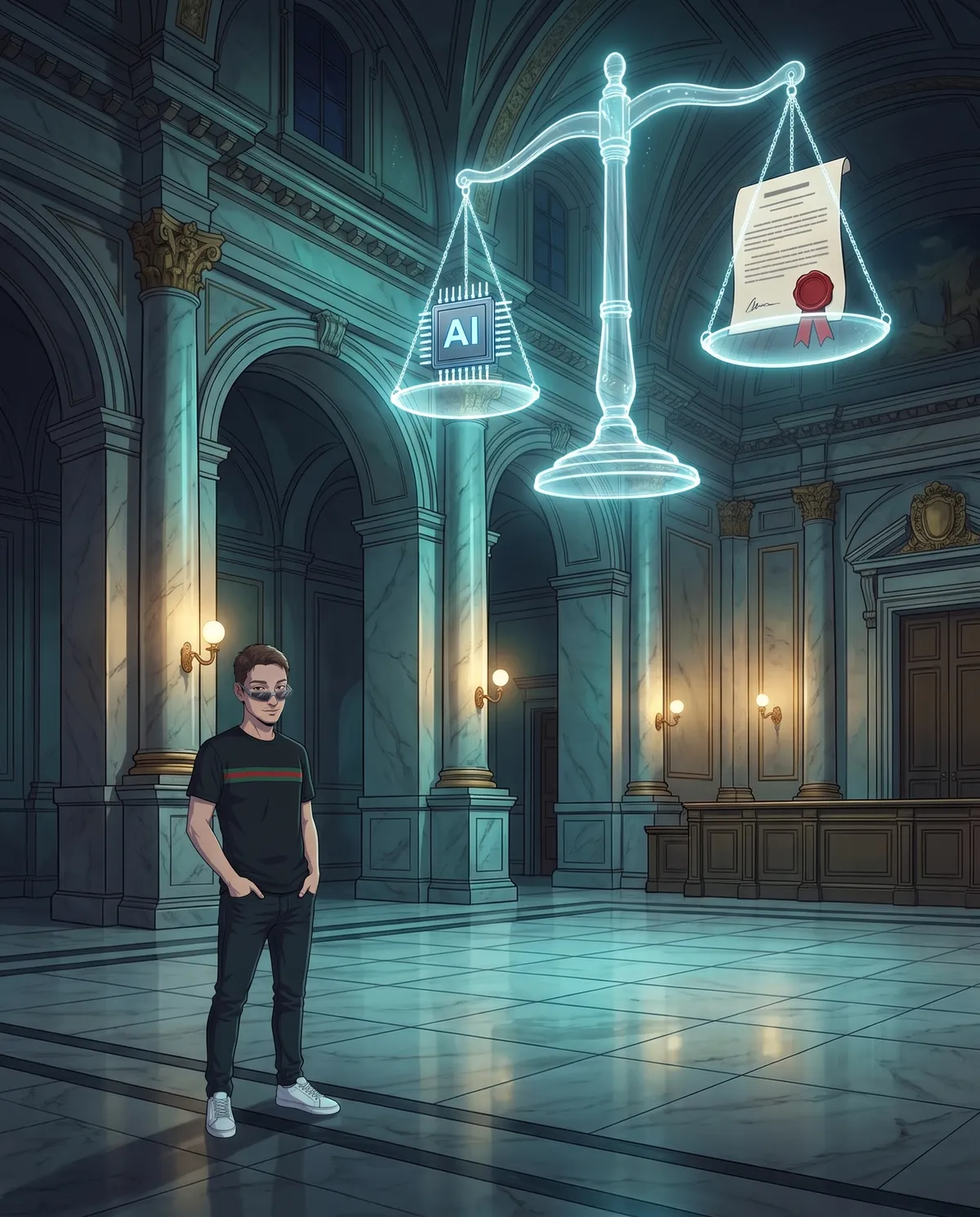
Legislative Decree No. 160 of September 9, 2026, which implements Italy's artificial intelligence law (Law 132 of 2025) and aligns it with the EU AI Act, has been in force since September 30. One part concerns law enforcement; the other affects everyone, because it changes the rules on compensation for damages.
Anyone harmed by an AI system can ask the court to order the disclosure of the system's technical documentation. If the harm stems from a breach of AI Act obligations, a presumption of causation kicks in: the injured party no longer has to prove everything. And they can take action directly against the liable party's insurance company. On the criminal side, there's a new offense for anyone who fails to secure, or tampers with, high-risk AI systems.
2 · OpenAI DevDay: dots, agents that keep working while you sleep

At DevDay on September 29, OpenAI announced more than twenty new features. The headline one is called dots: agents built on GPT-6 Astra that work around the clock toward whatever goal you give them, each with its own computer and browser in the cloud, kept separate from your laptop unless you grant access. They connect to more than 4,000 apps, work from ChatGPT, Slack, Teams, and even over the phone, and come with rules to ask for your approval or block certain actions.
For now they're only included in the $200/month Pro plan and Business Premium. Alongside them came ChatGPT Space, a shared workspace for a team and its agents; Pages, a collaborative document editor; and GPT-6.1 Sol, which replaces GPT-6 Sol at the same price.
3 · Meta brings Muse to small businesses

On September 29, Meta extended Muse, the AI agent it launched in the US earlier this month, to small businesses. The business version connects to more than fifteen tools (including Shopify, Dropbox, Slack, Canva, Notion, QuickBooks, Klaviyo, Stripe, and Zoom) as well as Instagram insights, Facebook Pages, and Meta ad accounts. In practice, it knows what you sell, your brand's tone, and the questions customers ask most often.
It's free with usage limits, and heavier users can upgrade to a subscription. Meta hasn't said when it will arrive in Europe.
4 · Claude Sonnet 5.5: same price, faster and cheaper work

Last week we covered the price war between Claude Opus 5.5 and GPT-6 Sol. On September 28, the second model in the family arrived: Claude Sonnet 5.5, the one many business chatbots and automation workflows run on. Pricing stays the same as Sonnet 5: $2 per million input tokens and $10 per million output tokens.
According to Anthropic, though, it writes more than 30% faster and costs up to 30% less per task, because it reaches the result using fewer tokens. Haiku 5.5, the cheapest model, is slated for the coming weeks.
5 · Google: Gems become “skills,” and Gemini calls businesses for you

Google is retiring Gems, Gemini's custom assistants. Starting November 17, they'll be automatically converted into “skills,” which you call up by typing “/” in a conversation. Until then they work as before, and the work you put into setting them up isn't lost.
Also, since September 24, Pixel 11 owners in the US with a Gemini subscription can have AI phone a business to check whether a product is in stock, book a table, move an appointment, or have an item held for them. The user follows a live transcript and can step in at any time.
In short
Since September 30, people in Italy who are harmed by AI have new tools to seek compensation, and businesses that use it are accountable even if they bought the software. Meanwhile, agents are leaving the lab: OpenAI puts them inside ChatGPT with dots, and Meta brings them to small businesses with Muse. Claude Sonnet 5.5 lowers the cost of a finished job without changing its pricing, and Google turns Gems into skills on November 17. The common thread is just one: know which tools you use, what they can do on their own, and who keeps them in check.
Sources: Confcommercio Firenze (Legislative Decree 160/2026 for businesses) · Diritto Bancario (the decree's civil and criminal provisions) · BGR (DevDay 2026 announcements) · OpenAI (DevDay 2026) · TechCrunch (Muse for small businesses) · CNBC (Muse for Small Business) · Unite.AI (Claude Sonnet 5.5) · TechCrunch (Gems become skills) · TechCrunch (Gemini calls businesses)
Frequently asked questions
What does Legislative Decree 160/2026 on artificial intelligence change for businesses?
Since September 30, anyone harmed by an AI system can ask the court for its technical documentation, benefits from a presumption of causation when AI Act obligations have been breached, and can go directly to the insurer. For a business, the first step is knowing which AI tools it uses, what for, and who checks their output.
What are ChatGPT dots and who can use them?
They're agents OpenAI unveiled at DevDay on September 29: they work around the clock toward a goal, with their own computer and browser in the cloud, and connect to more than 4,000 apps. For now they're only included in the $200/month Pro plan and Business Premium, with rules to approve or block actions.
What happens to Gemini Gems on November 17?
Google converts them automatically into “skills,” which you call up by typing “/” in a conversation. You don't need to do anything and your work isn't lost: until November 17 Gems work as before, then you'll find them under the new name in a different part of the interface.
Half an hour of conversation, no commitment, plain talk, no jargon
Let's talk →